

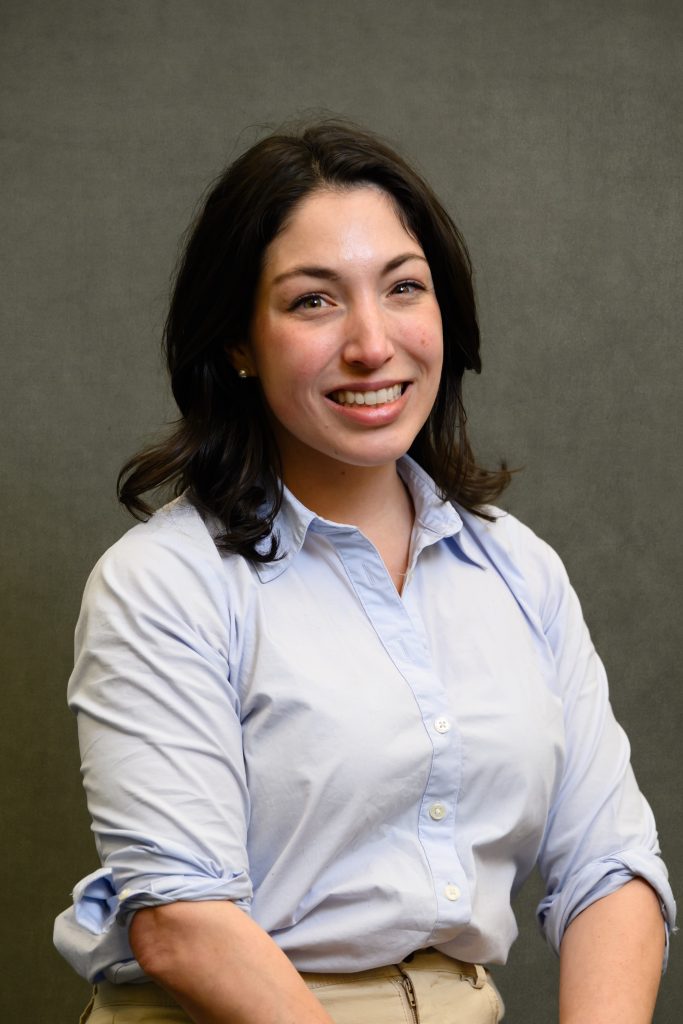
 Erica Morris has always been drawn to history.
“It was kind of my first love,” she said.
She always knew she wanted to major in history when she went to college, and she did, graduating from The College of New Jersey with a degree in history. What to do with that degree was a bigger question. She thought about law school for a while but said she became more interested in doing research and working with primary sources. Her senior thesis adviser suggested she look into the field of special collections and archives.
A few years later, she graduated from the Indiana University with a Master of Library Science degree and a specialization in archives and records management. She says she took a “detour” into public libraries for a little while, working for the Sussex County Library System in New Jersey, and later for Olivia Rainey Local History Library in Raleigh, North Carolina, as the local history archivist.
“That job combined my interests in local history and working with archival collections,” she said.
Morris was interested in working at Clemson, though, because her sister, Stephanie Morris is on the faculty as a senior lecturer in the Department of Languages. Their parents were also living in the area, having moved to Oconee County after retirement. When Morris’ husband got a job in Greenville, Clemson posted an opening for a military heritage archivist, and it seemed like the perfect fit.
“I knew about this area, and I knew what a wonderful institution Clemson was. We knew that we wanted to be in this area,” said Morris. “Everything just came together, like it was fate.”
Morris’ position was funded by a generous donation from alumnus Kelly Durham and his wife Yvonne. Her job is to manage and expand the military heritage collections in Special Collections and Archives, which includes everything from correspondence to medals to uniforms — anything that helps tell the story of the United States military throughout history. Many items are donated by Clemson alumni or are related to cadet life at Clemson, but items do not have to be Clemson-specific. She will accept donations from anyone who has military-related artifacts or papers.
“People are so excited to donate their artifacts, and we’re always happy to take them on,” she said. “It is just really exciting to be gaining artifacts that show the active service of people in different branches from different time periods.”
Morris said one of her favorite artifacts in the collection is a “short snorter,” which something that became popular among airmen in World War II. When they would go to different bars or other social activities on deployment, they would keep a dollar bill and have people they met along the way sign them.
“I think it’s such a fascinating artifact. They would tape the bills together as they filled with signatures, so you could grow a really long short snorter. And if they went into a bar and couldn’t produce your snorter, if you weren’t carrying it on you, you would have to buy everyone a drink,” she said. “It tells the story of that person’s service and all the people they served with.”
Another favorite item in the collection is the journal of Clemson alumnus Albert M. George ’36, who was a prisoner of war in the Philippines in World War II. George kept records of daily life in the camp and wrote down all the names of his fellow prisoners who were from South Carolina, making special note of those others who were from Clemson.
“The amount of notetaking he did was incredible,” said Morris. “He was able to pass down the experience they were going through to future generations. It’s very moving.”
Morris predicts that as she receives donations from veterans of more recent wars, that the collections will become more digital, with fewer physical documents.
Morris is also responsible for the Clemson Veterans Oral History Project, which records the stories of veterans for preservation in both Special Collections and Archives and the Library of Congress.
A large part of her job is building relationships with military and veteran organizations as well as with individual veterans.
“I do spend a lot of time interacting with the military community. For example, I was recently able to meet with a 103-year-old veteran from World War II and talk to him and his family and what artifacts we might be able to take on,” she said. “It is important that these donations are always a family decision.”
Outside of work, Morris enjoys cooking, hiking and spending time outdoors.