

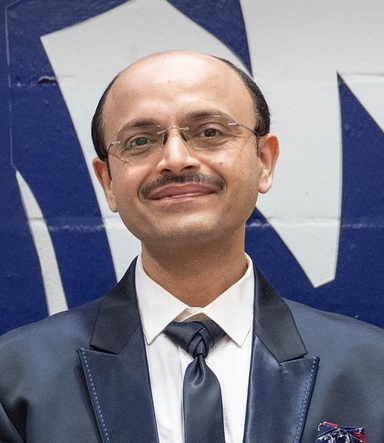
 Approximately 10 percent of the global population — around 770 million people — suffer from food allergies, says Sachin Rustgi, associate professor of molecular breeding in Clemson’s Department of Plant and Environmental Sciences. His research is exploring ways to alleviate this problem by developing hypoallergenic crops, such as peanuts and wheat.
Rustgi will discuss his research as part of the Clemson Libraries’ Dean’s Research Series on Thursday, February 19, at 4:30 p.m. in the Byrnes Room (401) of Cooper Library. The event will also be offered via Zoom. Click here to register to attend.
Rustgi will discuss his team’s work in creating low-immunogenicity crops and how they can be used to desensitize the immune system in people with peanut allergies and serve as an alternative diet for gluten-sensitive individuals. He will also discuss public perception of developing these crops through the conventional cross-breeding approach and gene editing.
In addition to his role as associate professor of molecular breeding, Rustgi is also a faculty scholar in the Clemson University School of Health Research and the Institute for Human Genetics. He is also an adjunct assistant professor of barley genetics with the Department of Crop and Soil Sciences at Washington State University, Pullman. His research primarily focuses on developing dietary therapies for individuals with celiac disease or allergies to wheat or peanuts; developing biomarkers for heat tolerance in soybean and peanuts; and novel strategies to mitigate the major insect pests or fungal pathogens of the primary South Carolina crops. His research has resulted in several high-impact publications in internationally recognized journals, including the Proceedings of the National Academy of Sciences USA, the Plant Journal, the Journal of Experimental Botany, and Plant Molecular Biology, and he has authored or edited three books.
Rustgi was awarded the Faculty Excellence in Research Award of the Washington State University College of Agricultural, Human, and Natural Resource Sciences; the Randall M. LaCross Distinguished Research Leadership Award from the South Carolina Governor’s School for Science and Mathematics; and the See Fellow Award of the Society of Extension Education, Agra, India. He was also invited to join the Wheat Initiative Expert Working Group on Wheat Quality for Processing and Health.
He holds a master’s degree in Botany from M.J.P. Rohilkhand University, Bareilly, and a Ph.D. degree in Crop Biotechnology from C.C.S. University, Meerut.